
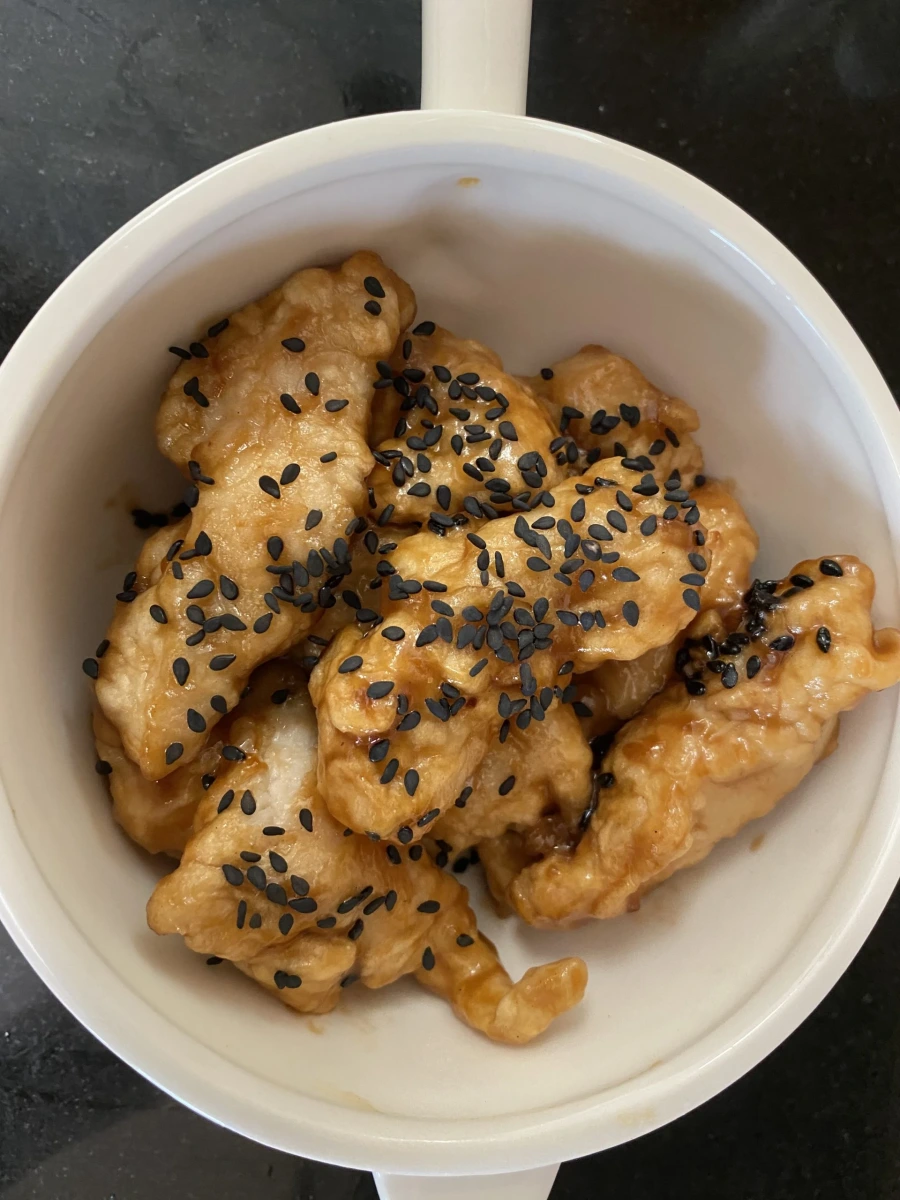
Recipe for Fried and Crispy Sesame Chicken
Preparing a good dish at home doesn't have to be a complex task or require endless hours in front of the stove. The key is always to understand how ingredients behave and how we can leverage their natural textures. On this occasion, we are going to dive into the preparation of a delicious recipe that combines the interior tenderness of the meat white with an extremely crispy and aromatic exterior crust. This dish has its roots in the fusion of oriental techniques and flavors adapted to our family customs, achieving a perfect balance that appeals to both adults and children.
El protagonista indiscutible aquí es el ajonjolí, also known in many regions as sésamo. This small seed has an extraordinary ability to retain heat and toast slowly in the oven, releasing essential oils that perfume the entire kitchen. By combining these seeds with a light breading and baking them at high temperature, we achieve that fried and golden effect without needing to submerge the pieces in liters of oil. It's a fantastic technique for everyday meals, especially when we're looking for options that are gentler on our digestion but still maintain that comforting factor we all crave at the end of the day.
In addition to the texture, the flavor profile of this chicken is elevated thanks to a preliminary dressing that acts as a marinade and glue for the crust. By using everyday ingredients you already have in your pantry, we transform a simple chicken breast into a memorable meal. Moisture is sealed inside, avoiding the classic problem of dry meat, while the exterior becomes a firm and flavorful layer. It's the kind of preparation that makes you proud of your culinary skills, demonstrating that by knowing the reason behind each step, the results are always exceptional.
To complement this experience, we will integrate a sauce sweet honey-based sauce that wonderfully balances the savory and toasted notes of the seed. This sweet and sour combination is an infallible classic in any dinner. Whether you're planning a weekend meal or looking to refresh your weekly menu in this dynamic 2026, mastering this technique will open doors for you to experiment later with other cuts or even different types of breading. Let's put on our aprons and understand step by step how to make this homemade classic absolutely perfect from the first try.
Preparation time
Understanding and managing time in the kitchen is the first step to truly enjoying the culinary process. For this preparation, the total time we will invest is approximately thirty-five minutes, a quite friendly margin for any day of the week. This time block is divided very clearly so you can organize yourself without feeling rushed or stressed. The active preparation of the ingredients will take you about twenty minutes. During this period, we will dedicate ourselves to cleaning the meat, preparing the wet mixture that will serve as the base, and covering each piece with our dry mixture. It's manual work that requires a bit of attention, but it turns out to be extremely relaxing when you have everything at hand.
The cooking time will be about fifteen to twenty minutes, depending on your oven's power. This is the perfect time to put away utensils you no longer need, clean your workspace, or prepare a simple side dish. By optimizing times in this way, you ensure that when the dish comes hot out of the oven, your space is tidy and you are ready to sit down and enjoy. This recipe is calculated to yield four generous portions, ideal for a family meal, and its difficulty level is completely simple, designed so that anyone, regardless of their previous experience, can achieve a spectacular result.
It is fundamental not to rush the breading stage. Pressing the seeds firmly against the surface ensures they don't detach during cooking, which is vital for achieving that uniform crust we're looking for. If you try to speed up this step due to lack of time, you run the risk of the coating being irregular or falling off when serving. Therefore, I recommend dedicating those full twenty minutes to the preparation. Think of it as a direct investment in the final flavor and texture of your meal. Patience, though not measured in cups or spoons, is an indispensable ingredient.
Finally, consider a couple of extra minutes once you take the tray out of the oven. Letting the pieces rest briefly before moving them allows the internal juices to redistribute and the outer crust to fully set with the residual heat. This small resting interval makes a big difference between a bite that falls apart and one that maintains its perfect structure. Organize your minutes, respect the timing of each stage, and you'll see how the cooking experience becomes much more fluid and gratifying.
Ingredients
The selection of components is the foundation of any great preparation. For our recipe, we will start with the main element: chicken breasts. We will need approximately half a kilo, clean and skinless. We chose this cut because its neutral flavor perfectly absorbs seasonings and its firm texture makes it easy to cut into uniform pieces. If for some reason chicken breast usually turns out too dry for you, you can substitute it with boneless thighs; the process will be exactly the same, although the oven time might require a couple of extra minutes due to the thigh's higher natural fat content.
For the layer that will provide moisture and flavor to the meat, we will use a creamy base. You will need half a cup of mayonnaise traditional, which will act as an excellent binder thanks to its oil and egg emulsion, protecting the meat from intense heat. To this, we will add a tablespoon of dry mustard powder, which adds a slightly spicy and earthy touch without adding extra liquid that would ruin the breading. We will also incorporate a quarter cup of finely chopped onion, which will become sweet and aromatic when baked. If you don't have dry mustard in your pantry, you can omit it or use a pinch of garlic powder as an alternative, although the flavor profile will subtly change.
The crispy exterior requires two key elements. First, half a cup of fine, dry breadcrumbs. This bread will absorb surface moisture and create a firm barrier. Second, and very important, a quarter cup of sesame seeds. You can use white, black, or a mix of both sesame for a much more attractive visual appearance. Sesame is rich in natural oils, so when it comes into contact with the oven's heat, it will toast and enhance its characteristic nutty flavor. This dry mixture is fundamental for achieving the desired texture without the need for deep frying.
To accompany and contrast the savory flavors, we will prepare a quick and delicious dip. You will need an additional half cup of mayonnaise and three tablespoons of honey of good quality honey. Honey not only adds sweetness, but also a viscosity that makes the sauce adhere perfectly to each crispy bite. If you prefer a less sweet flavor, you can adjust the amount of honey to your liking or add a few drops of lemon juice to balance it with an acidic touch. All these ingredients are easy to find and, when combined with the correct technique, transform into something extraordinary, just like when you prepare some delicious nuggets caseros de pollo con empanizado dorado for the little ones at home.
Utensils we will use
Having the right tools prepared before turning on the heat not only makes the job easier, but also guarantees an even and safe result. The first indispensable utensil is a firm cutting board and a sharp knife. It is crucial that the knife cuts the meat fibers cleanly without tearing them, as irregular edges tend to burn faster in the oven. I suggest dedicating a board exclusively for raw meats for basic home hygiene reasons, thus avoiding cross-contamination with the vegetables you may be preparing for your side dish.
We will need a couple of bowls or deep containers. One of them will be for mixing our creamy mayonnaise, mustard, and onion marinade. The second bowl, which ideally should be a bit wider or flatter, will serve to combine the breadcrumbs with the seeds. A wide container, such as a large deep plate or a baking dish, greatly facilitates the task of breading the pieces, allowing you to roll them comfortably without dirtying the entire table. To handle raw meat and transfer it from one bowl to another, kitchen tongs are ideal, although two simple forks perform the same function perfectly.
For cooking, the central element will be a large baking sheet. Heavy metal or aluminized steel ones are fantastic because they distribute heat evenly, which helps the base of our pieces get as golden as the top. If your baking sheet tends to stick food, I recommend lining it with parchment paper or baking paper, or applying a very light layer of oil with a napkin. Avoid aluminum foil if possible, as it can sometimes retain too much moisture under the meat, softening that crust we are working so hard to achieve.
Finally, you will need a small bowl and a spoon to mix your honey dip, and perhaps a thin spatula to carefully remove the hot pieces from the tray once they are ready. No professional equipment or sophisticated machinery is needed; daily cooking is about making the most of the utensils we have at hand and understanding how to use them to our advantage. A good flat spatula will allow you to lift each bite, ensuring that the bottom crust remains adhered to the meat and does not stick to the metal.
Preparation
For the base mixture and the meat
Step 1: Start by washing your hands and ensuring your work area is clean. Take the chicken breasts and dry them very well with paper towels. Removing external moisture is a critical step, as water interferes with the adherence of any marinade. Once dry, cut them into pieces or strips of an even size, approximately three to four centimeters thick. Cutting pieces of the same size ensures that all finish cooking at exactly the same time, preventing some from remaining raw while others dry out.
Step 2: In your deep bowl, place the mayonnaise, the dry mustard, and the finely chopped onion. Use a spoon to mix everything until you see an integrated and homogeneous paste. Submerge the cut pieces in this bowl and stir well so that each piece is completely covered by a generous layer of this mixture. The fat of the mayonnaise will act as a protective shield in the oven, keeping the natural juices trapped inside. If you have time, you can let this rest in the refrigerator for about fifteen minutes, but if you are in a hurry, you can use it immediately.
For the crispy breading
Step 3: In the wide container or deep plate, pour the dry breadcrumbs and the chosen seeds. Mix well with your fingers or a fork so that the seeds are evenly distributed among the bread. Take a piece covered with the creamy mixture, drain it slightly if it has excess, and place it on the dry ingredients. With clean hands or tongs, cover it completely and press gently. This pressure is the secret to prevent the crust from crumbling later. Repeat this process patiently with each piece.
Step 4: As you bread the pieces, place them on your previously prepared baking sheet. It is essential to leave a space of at least two centimeters between each portion. If you pile them up, the hot air in the oven will not be able to circulate properly, which will generate steam and result in a soft and moist exterior instead of the golden and firm finish we are looking for. This principle of spacing is applicable to many recipes, for example, when you bake alitas de pollo glaseadas con naranja y miel so they turn out perfect.
For cooking
Step 5: Preheat your oven to about 220 degrees Celsius, which is equivalent to about 425 degrees Fahrenheit. A high temperature is necessary to quickly toast the seeds and create the crust before the internal meat overcooks. Place the tray on the central rack of the oven and bake for about twelve to fifteen minutes. It is not necessary to turn them over if your oven distributes heat well, but monitor the process. You will know they are ready when you prick the largest piece and it feels tender, and the exterior has a beautiful golden toasted color.
Step 6: While the oven does its work, prepare your dressing. In a small bowl, combine the remaining half cup of mayonnaise with the tablespoons of honey. Whisk vigorously with a spoon until both ingredients melt into a smooth, shiny, and slightly thick sauce. Taste the mixture and adjust the sweetness if you deem it necessary. You can keep this sauce at room temperature while you wait for the main course to be ready to come out of the oven.
To finish and serve
Once you notice that characteristic golden color and the aroma of toasted nuts fills your kitchen, carefully remove the tray from the oven using thermal gloves. Let the pieces rest on the same tray for two or three minutes so that the crust sets and the juices stabilize inside. For plating, transfer the crispy portions to a large platter or individual plates. Serve the food piping hot, placing the honey dressing in a small container in the center so that each diner can dip their bite. Accompany it with a fresh side dish, such as a green salad or steaming white rice, which will perfectly balance the richness of the flavors.
Nutritional Information
Knowing what we put into our bodies helps us better plan our meals throughout the day. This preparation, being made with lean breast and baked instead of submerged in boiling oil, offers a quite balanced profile for a family dinner. The values I share below are estimates calculated per serving, assuming the recipe is divided into four equal plates. Keep in mind that these numbers may vary slightly depending on the exact size of the pieces and whether you decide to be more generous with the dressing when serving.
Calories: 420 kcal
Proteins: 28 g
Fats: 22 g
Carbohydrates: 26 g
Fiber: 3 g
It is interesting to note that most of the protein comes directly from lean meat, which is excellent for satiety. The fats present are a combination of the natural and healthy oils provided by the seeds, along with the mayonnaise base used in the breading. Carbohydrates remain in a moderate range, coming mainly from the breadcrumbs and the sweet touch of honey. It is a dish that leaves you satisfied without that feeling of heaviness that often accompanies traditional fast-food preparations, demonstrating that cooking at home always allows us greater control over our food.
5 keys to make it perfect
For this preparation to go from good to truly extraordinary, there are small technical details that make all the difference. The first key is moisture control in the protein. It is absolutely imperative to pat the meat dry with kitchen paper before starting. If the surface is wet with water or juices from the packaging, the creamy marinade will slip off and, consequently, the breadcrumbs will have nothing to cling to, resulting in a crust that falls apart on the tray. Take those extra ten seconds to dry each piece very well.
The second key lies in the size of the cuts. Patience when using your knife translates into homogeneous cooking. If you cut one piece very thick and another very thin, the thin one will dry out and its seeds will burn, while the thick one could remain raw in the center. Try to maintain a standard of about three centimeters thick. This uniformity allows you to blindly trust the oven timer and visual cues, ensuring that every bite you bring to the table has exactly the same quality and tenderness.
The third secret is pressure during breading. Many times, wanting to do things quickly, we simply pass the meat through the powder and shake it off. To achieve that firm layer that resembles a fry, you must place the piece on the bread and seeds, and press firmly with the palm of your hand or fingers. Imagine you are packing snow to make a snowball. This slight mechanical pressure forces the seeds to embed themselves in the creamy base, creating an armor that will resist the intense heat of baking without detaching.
The fourth recommendation has to do with heat circulation. As we mentioned in the steps, spacing on the tray is vital. If you don't have a large enough tray, it is a thousand times preferable to bake in two batches than to pile all the food together. When the pieces touch, they generate steam between them, and steam is the number one enemy of crispiness. Let the hot air circulate freely around each portion so that the toasting is even on all its angles.
Finally, the fifth key is not to skip the resting time out of the oven. When the meat is at high temperatures, its internal juices are boiling and concentrated in the center. If you cut or bite the piece immediately, those juices will spill out, leaving the fiber dry. By giving it three or four minutes of rest on the hot tray, the temperature gently drops and the juices redistribute towards the edges, ensuring that every bite is incredibly juicy and that the outer coating finishes solidifying completely.
When is it ideal to enjoy it?
This dish has wonderful versatility that makes it suitable for multiple occasions. Due to its friendly flavor profile and attractive texture, it is an ideal candidate for weekday family dinners, especially when we are looking for something that breaks the routine but does not involve hours of subsequent cleaning. Children love the dynamic of dipping their food in the sweet sauce, and adults are attracted by the sophisticated and toasted touch that the seeds provide. It is also a fantastic option to prepare during the weekend if you plan a movie night at home or an informal gathering with friends, as it can be served in smaller pieces as a snack or hot appetizer.
Furthermore, it is an extremely grateful preparation if you have any leftovers. Although the outer coating loses a bit of its initial crispness when stored in the refrigerator, you can easily revive it by heating it for a few minutes in a small electric oven or in an air fryer, which are so common nowadays, restoring its crispy character in a matter of moments. It is the kind of recipe that solves a quick lunch the next day, maintaining an intact and delicious flavor, and reminding us why investing time in home cooking is always the best decision for our well-being and palate.
Culinary glossary
To ensure we speak the same language in the kitchen and there are no doubts about the instructions, here are some simple terms we have mentioned that will serve you for many other preparations.
Breading: Refers to the process of coating a food with breadcrumbs or a similar dry ingredient, usually after having passed it through a wet substance that acts as glue. It is the basic technique for achieving crispy exteriors.
Homogeneous: In cooking, we use this word when we mix two or more ingredients until they look like one thing, without lumps or separations, as we achieve when combining mayonnaise with mustard and onion.
Tender point: It is a visual and tactile signal. It means that when you prick a food with a fork or knife, it enters and exits easily, without encountering elastic resistance, indicating that the meat is cooked but still retains its moisture.
Sear: Although in this recipe we achieve it in the oven, searing means quickly browning the surface of a food at high temperature. This creates an exterior crust that helps develop complex flavors and retain the ingredient's structure.
Julienne: Although we are not julienning today, it's a common term that means cutting food into very thin, elongated strips, similar to the size of a matchstick. I mention it because it's an excellent way to prepare vegetables if you decide to make a salad to accompany your dish.
Share your experience
The kitchen is a living space, designed for experimenting, adjusting flavors to your personal taste, and, above all, for sharing the results with those you love most. I would love to know how it went preparing this dish. Did you decide to use black sesame to give it a more dramatic color contrast? Did you adjust the touch of lemon in your dressing? Leave your comment and share your own tricks and variations. Every kitchen is a world, and we always learn from each other's ideas when we turn on the oven!



Super recipe this ‘Sesame Chicken’ ❤️. I will make it again this weekend.
This ‘Sesame Chicken’ turned out better than I expected. The recipe is very well explained. It's really worth it.
Super recipe this ‘Sesame Chicken’. I prepared it yesterday and it turned out spectacular. Perfect for Sunday.